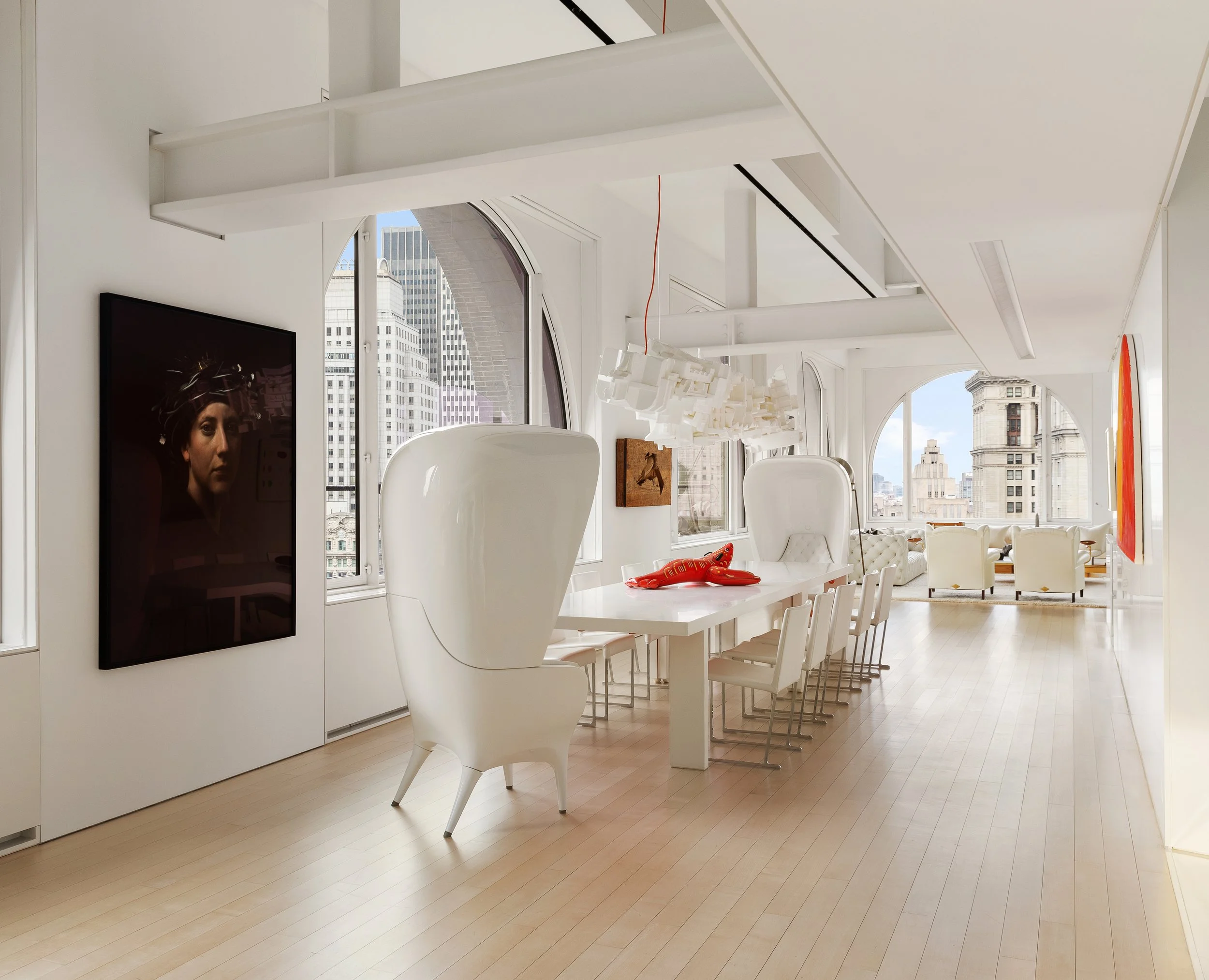
Where Play Meets Precision: Inside Sky House
Sky House is more than a residence. It’s a fully immersive experience where architecture, art, and personality converge. In this exclusive conversation, Compass Luxury sat down with interior designer Ghislaine Viñas to explore the vision, creativity, and bold individuality that define one of the most unforgettable properties in modern luxury.
Sky House has been described as both a residence and an immersive art piece. When you first approached the project, what was the conceptual framework that guided the design decisions?
We had previously worked with these clients, so I already had a deep understanding of who they are, how they live, how they entertain, and how incredibly welcoming they are. That personal insight truly guided and became the foundation for the design.
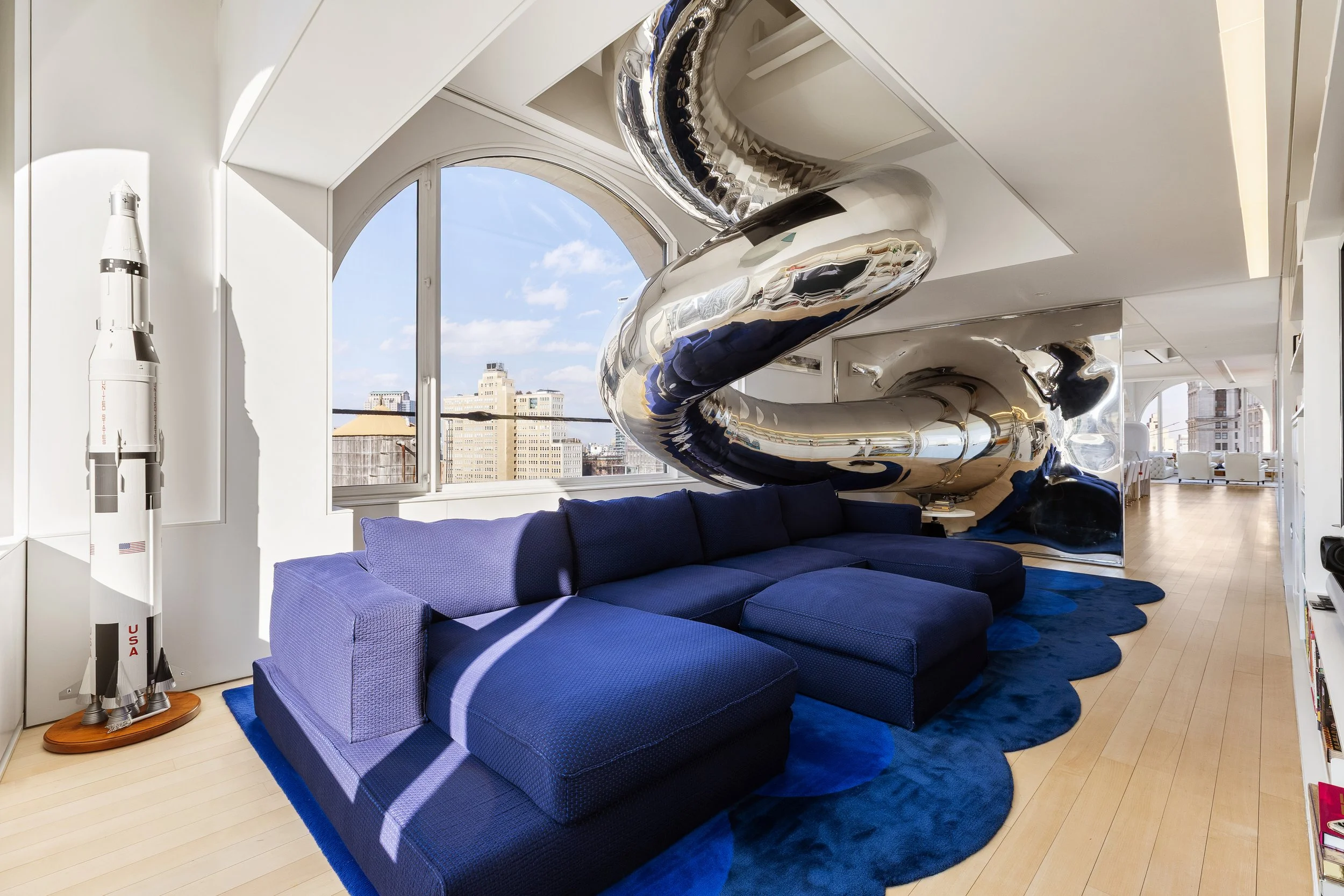
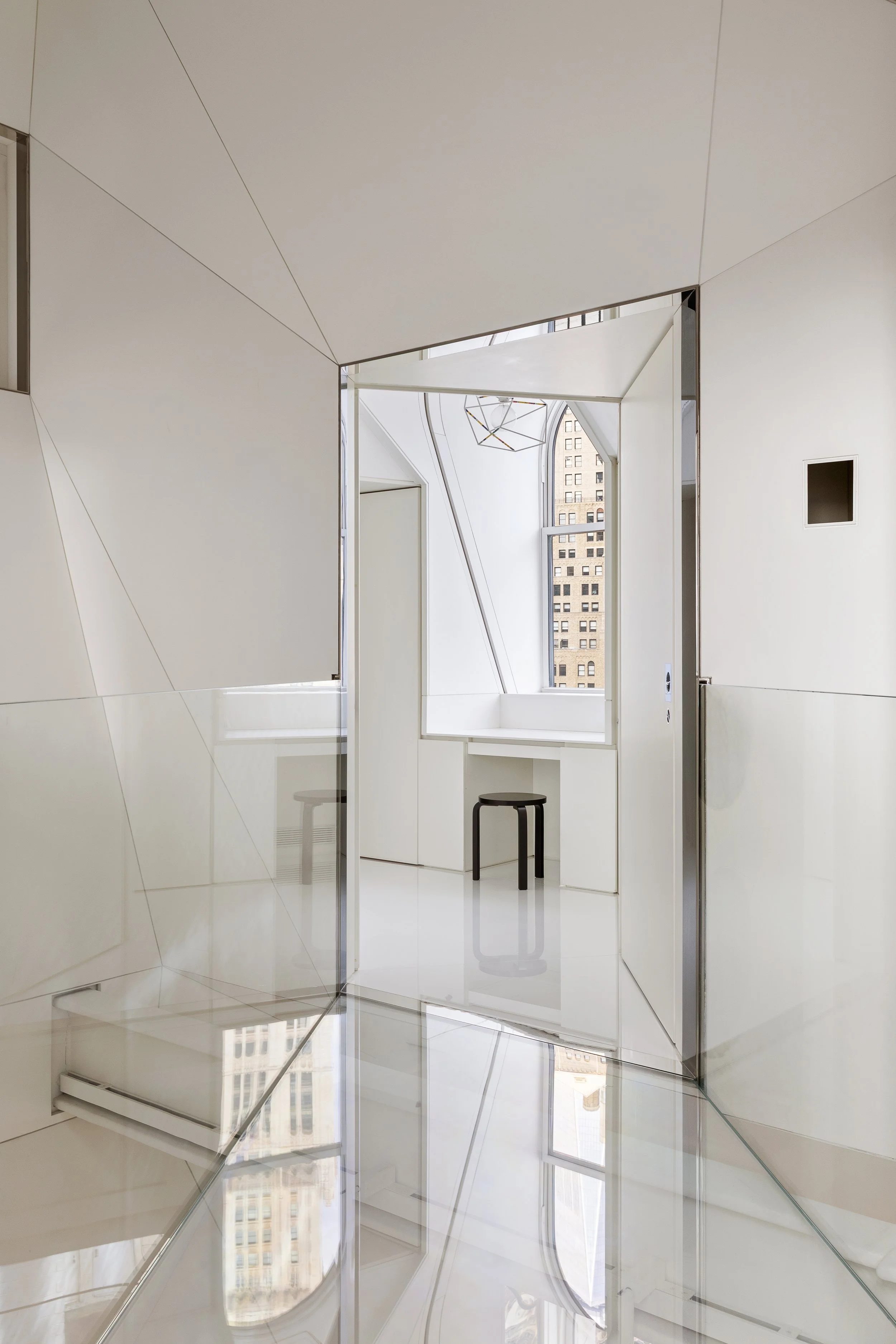
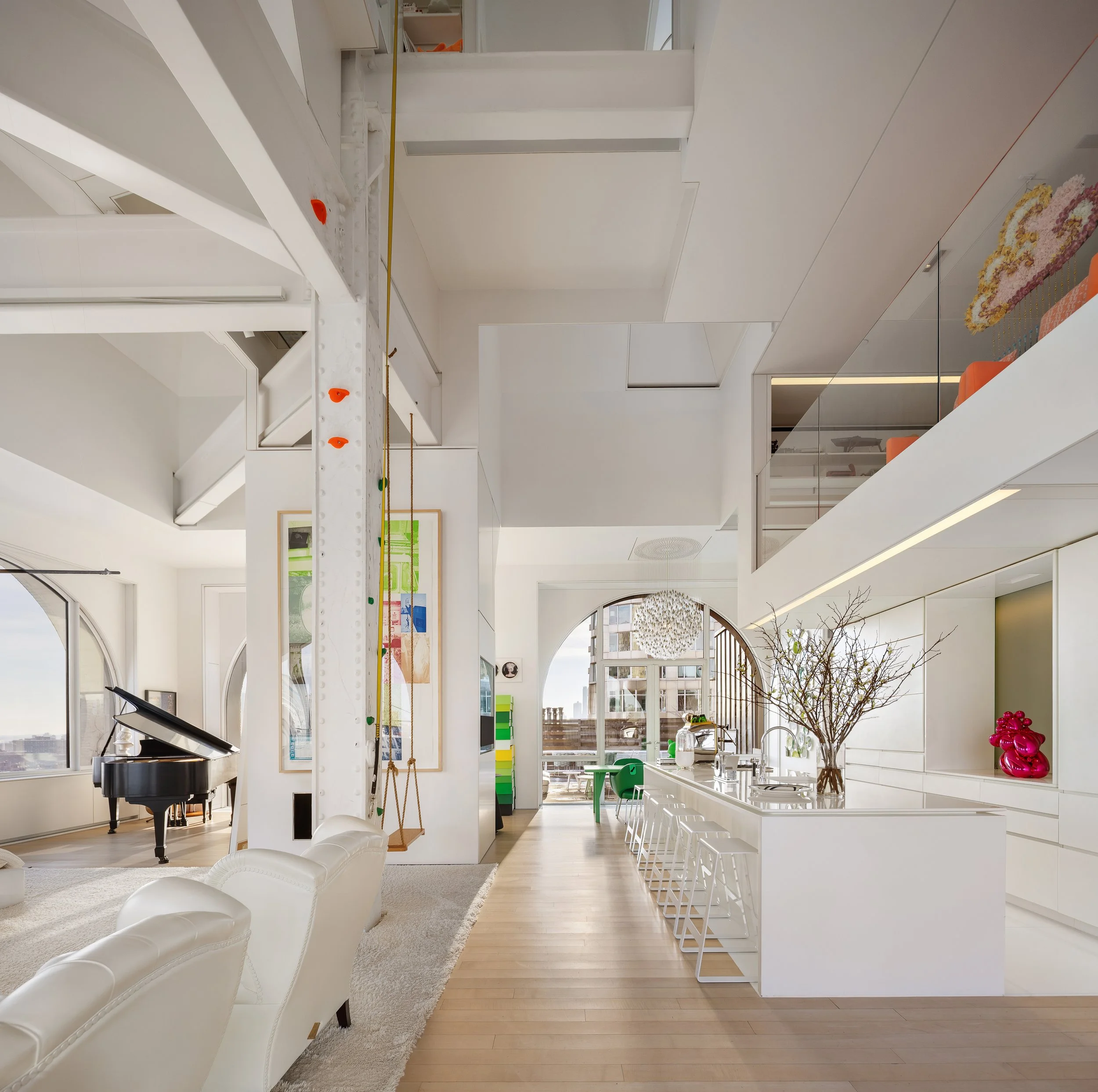
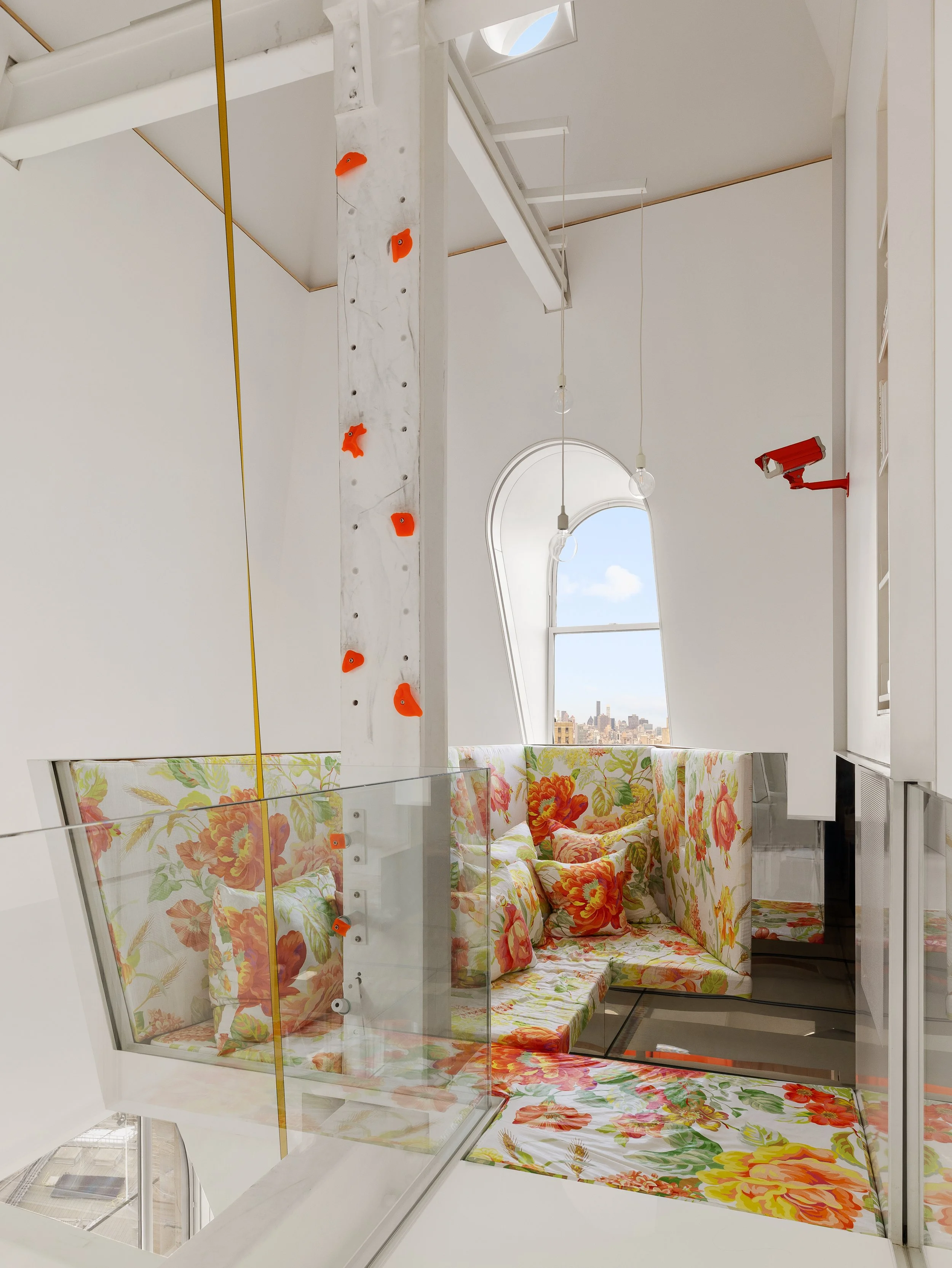
The architecture and interiors exist in a playful juxtaposition, so our conceptual framework was about carefully balancing that tension. Architect David Hotson had already created an extraordinary narrative with the glass bridges and iconic slide shaping the experience of how one moves through the home. Our role was to bring warmth, color and personality into that existing framework. The result is a captivating dialogue between the architecture’s boldness and the exuberant human side of living in it.
The home feels playful yet extremely precise. How did you balance whimsy and childlike exploration with architectural rigor and livability?
The clients have a very clear contemporary point of view, but each of them gravitates toward different interests. What makes their taste so interesting is that the final aesthetic is really a collective of their individual perspectives, which gave me a lot to play with as a designer.
The clients are deeply passionate about architecture, art, and design, so there was a shared language from the beginning. While they wanted a sophisticated and thoughtfully considered home, they also have a wonderful sense of humor, which allowed us to introduce moments of surprise and playfulness.
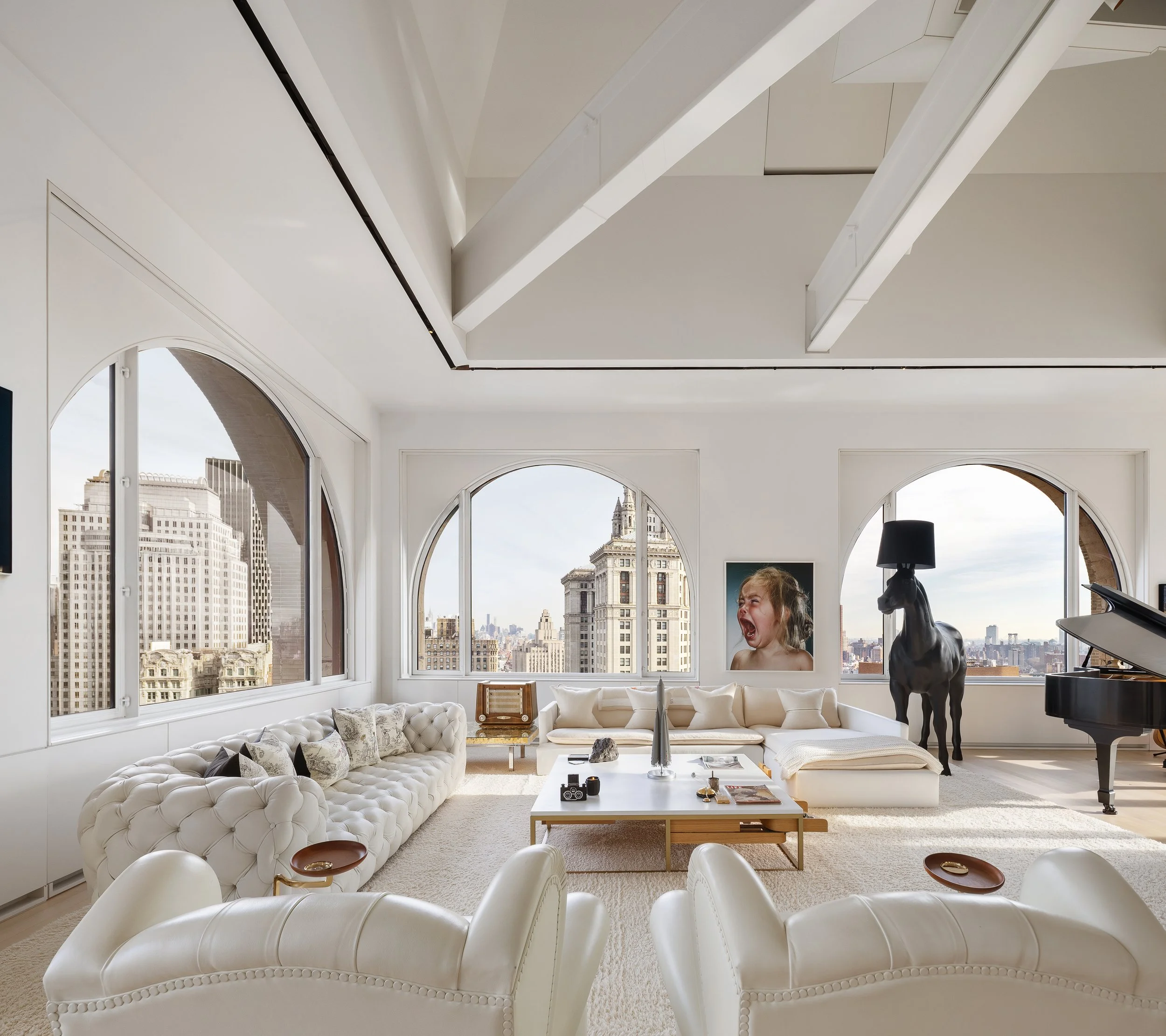
With ceilings reaching nearly 46 feet, the volume of the space is extraordinary. What strategies did you use to make the space feel intimate enough for daily living?
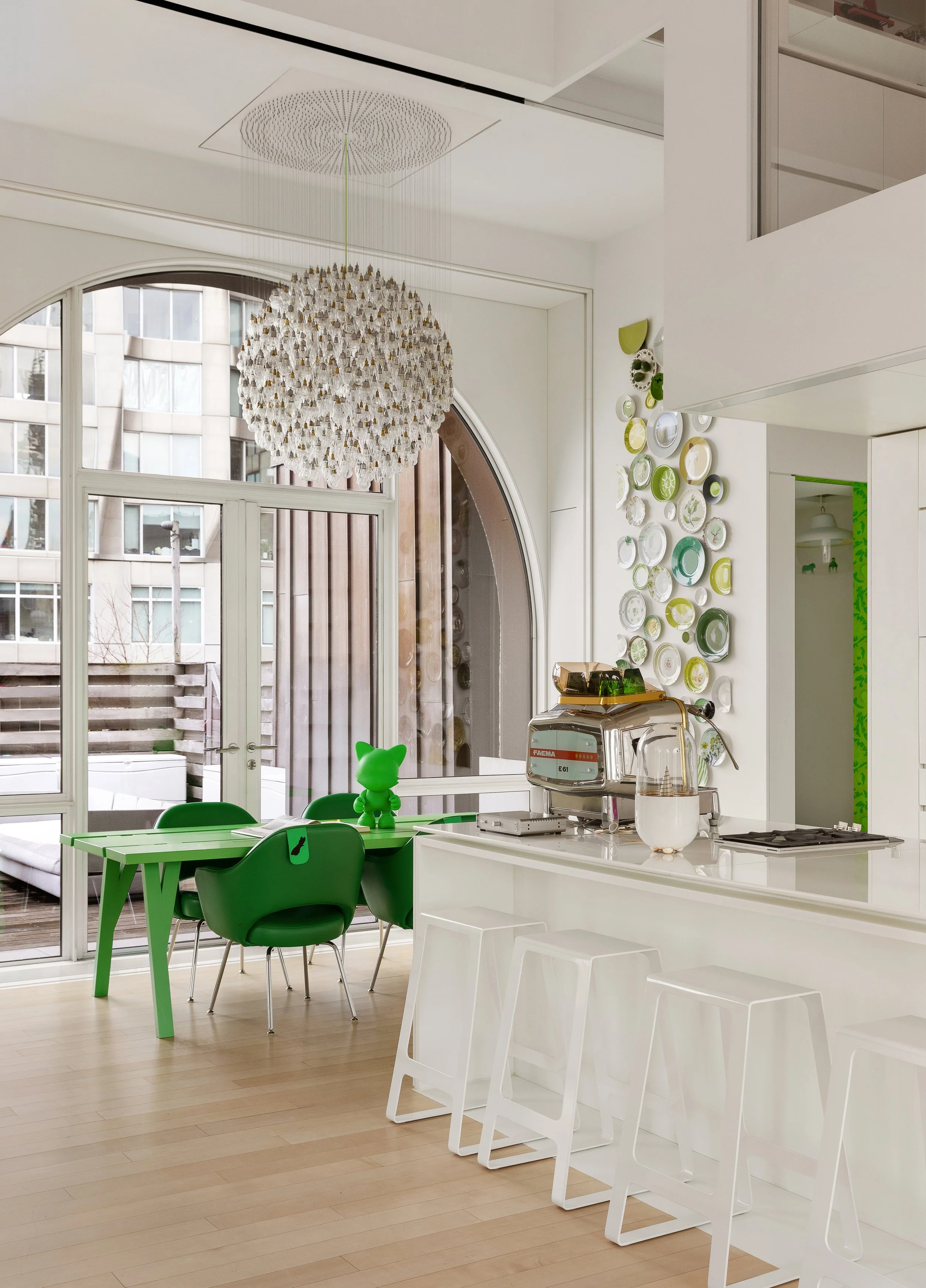
To make the space feel intimate enough for daily living we incorporated warmth, color, and art. As you move throughout the home, you are constantly greeted by artwork that is deeply meaningful to the clients and compelling to any art lover. I’ve always believed that art is the soul of a room, and in this home it brings a sense of personality and human scale to the architecture.
Rather than relying on natural stone or neutral materials, we gave the home a little spontaneity and youthfulness by adding bright color drenching. Working with architect David Hotson, we embraced his idea of creating “volumes within volumes,” and that concept became a guiding principle for how we implemented color in the space. The “volumes” within the architecture directly dictated where color drenching would be introduced, for example the showers within each guest room are completely color-drenched, turning them into immersive spaces.
We also reinforced this sense of intimacy with monochromatic furniture moments, such as the green breakfast nook next to the kitchen. In contrast, the living room is entirely cream. We explored many different color options there, but ultimately cream felt the most elegant. Using luxurious materials such as leather, merino wool, and tufted rugs allowed us to layer textures that add depth and softness, making the living room feel warm, sophisticated, and comfortable despite the home’s extraordinary scale.
Sky House evokes a sense of wonder and curiosity, almost like an architectural playground. What emotional responses were you hoping visitors would feel as they move through the home?
Many people have already seen photographs of the home before visiting, but they often tell me that the experience in person is completely different. From the images, some expect the space to feel cold or unappealing, but when they actually walk through it, they discover that it is warm, inviting, and full of personality and wonder. That sense of surprise is something I love. It’s a home that really has to be experienced to be fully understood. What makes it so special is that it is truly one of a kind, and designing the interiors for a home like this is remarkable because it is so identifiable and memorable. It’s not the kind of place where you ask, “Have I been there before?” Whether someone loves it or not, it’s iconic, and people never forget it.
Do you think homes like this challenge traditional ideas of what luxury living looks like?
I personally don’t believe this home should challenge traditional ideas of what luxury looks like. If you’re going into the very personal experience of creating a home for yourself, why not make it something a bit different and truly unique? Too often the world of luxury can become a bit close-minded, as if there’s a rule book or script you’re meant to follow. For me, creativity and luxury belong in the same world. There’s something refreshing about stepping away from this rule book, and instead having the freedom to create something remarkable and entirely your own.
Sky House has been recognized by Interior Design Magazine as both Best of the Decade (2015) and Best of the Last Twenty Years (2025). What do you think makes the project endure beyond design trends?
Receiving both of these awards from Interior Design Magazine is meaningful because it suggests the project is still perceived the same way as when it was fresh and new. I believe that’s because the design narrative was crafted specifically for these clients and their personalities. It wasn’t driven by trends or a particular moment in design but truly rooted in who they are and how they live, which gives the project a kind of authenticity that lasts.
I think it’s interesting that given the opportunity to design this home for a new client, the space could easily take on an entirely different aesthetic. It could become more masculine, more monochromatic, or be something completely new. Many of the built-in elements could be reupholstered or reinterpreted, allowing the interiors to reflect a new soul and personality while the architectural shell remains intact.