
Inside the Darien Estate Rewriting the Rules of Compound Living
865 Hollow Tree Ridge Road in Darien, Connecticut is an estate that earns its distinction quietly, announced by a Bradford pear-lined drive and set across 9.4 acres of considered, purposeful land. In this exclusive conversation, Compass Luxury sat down with architect Louise Brooks to explore the design philosophy behind the main residence, the organic evolution of the extraordinary field house, and the rare alignment between client and creator that made this three-parcel offering one of the Gold Coast's most enduring properties.
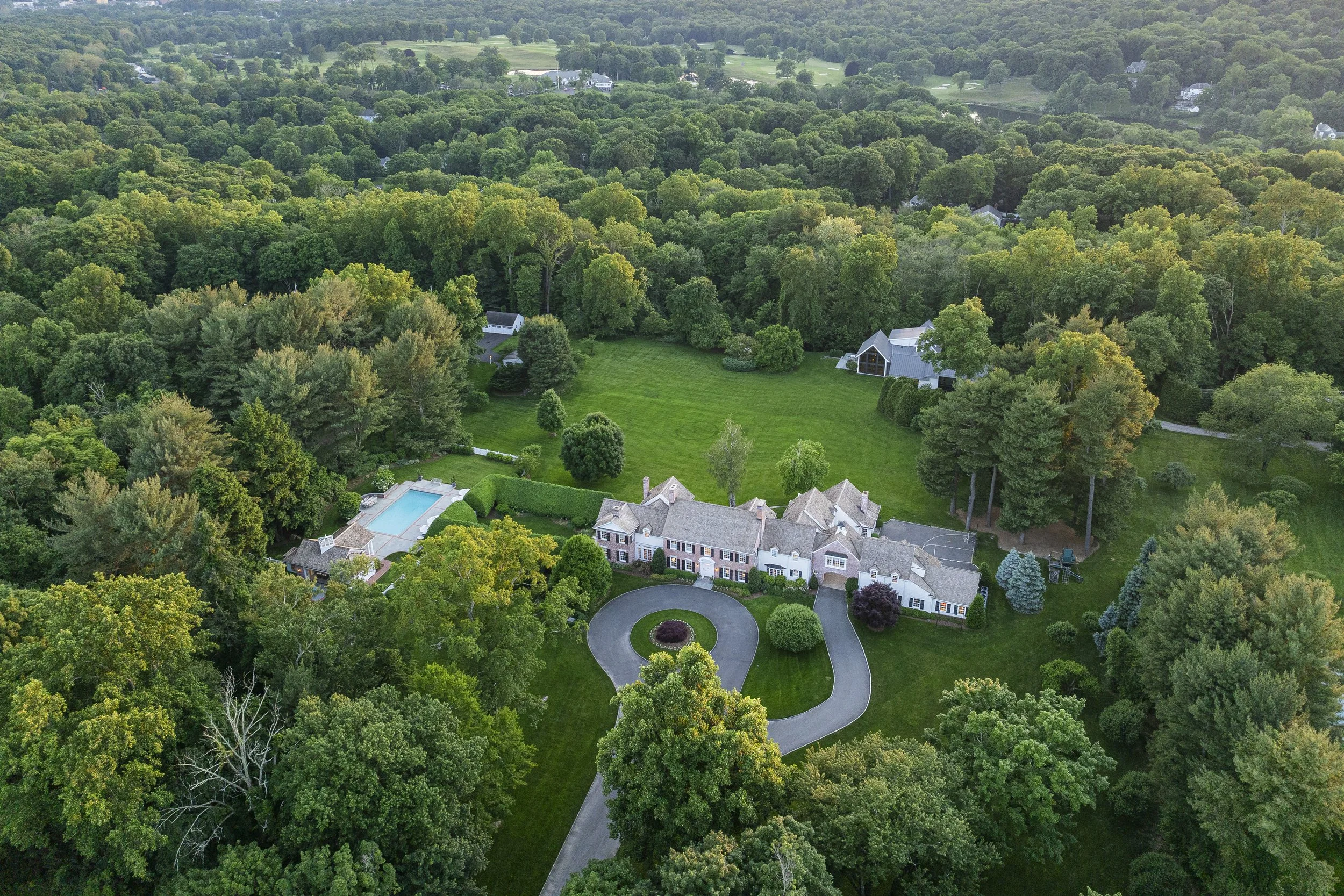
What do you consider the defining moment—or signature gesture—of the property?
The defining gesture of the property is the seamless dialogue between past and present—the way the home honors its original character while opening itself to modern living. That moment is most clearly felt in the blending of the old and new that defines the house. The architecture does not announce itself; it reveals itself gradually, through aligned sightlines, balanced volumes, and a natural flow between interior and landscape. It’s a measured, intentional gesture—one that prioritizes harmony over contrast, and in doing so, creates a home that feels both timeless and entirely of the present.
Where did the idea for the field house come from?
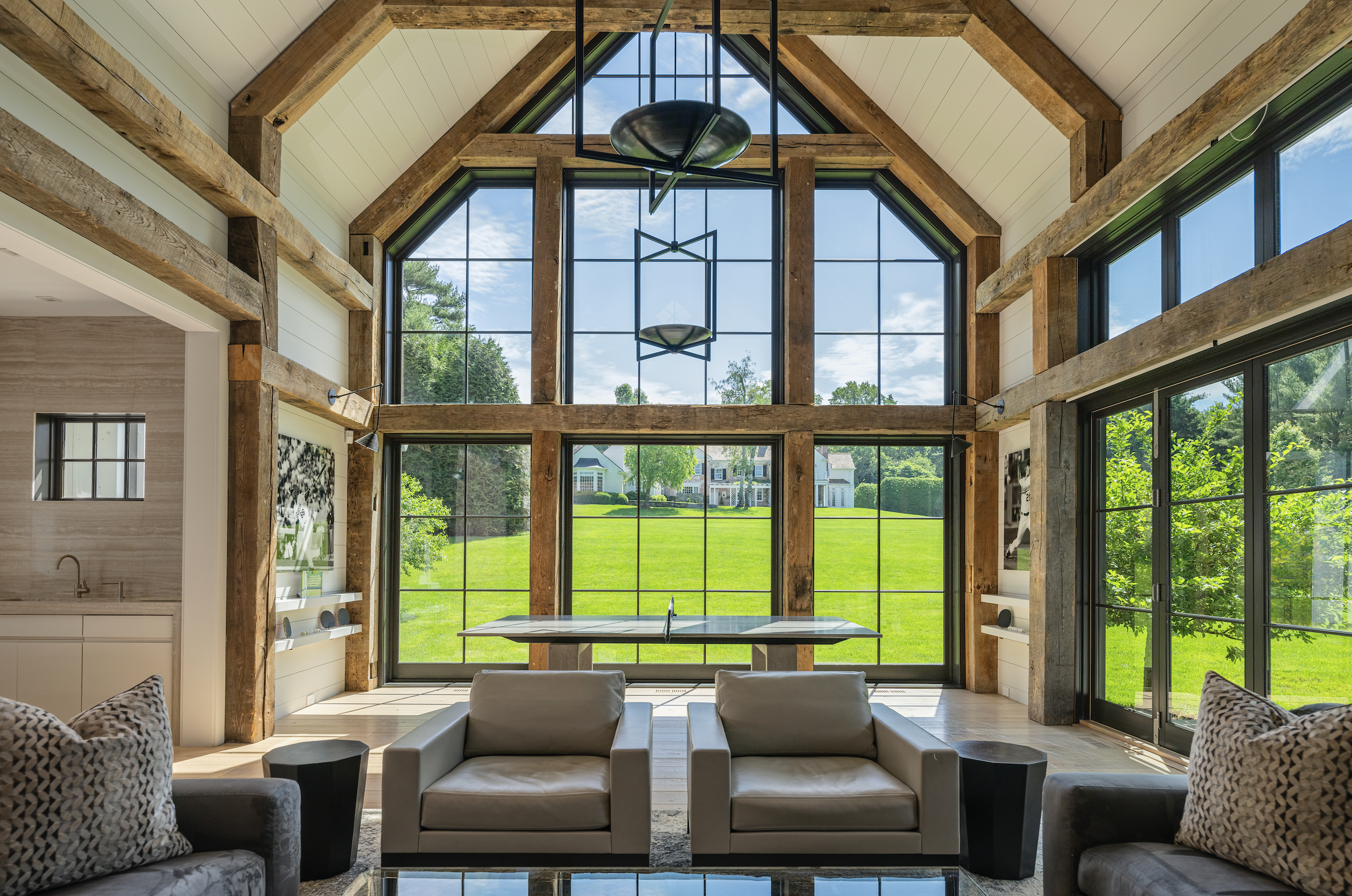
The idea for the field house evolved quite organically, beginning with something very personal—the owners wanted a dedicated space for their boys, initially centered around an indoor batting cage. That led to a discussion of incorporating a squash court, and in studying the proportions, we realized the batting cage aligned closely with the length of a bowling lane.
What began as a single-purpose structure gradually developed into a more comprehensive wellness retreat. It evolved to include a resistance pool, a bunkroom, and a series of flexible spaces designed for both activity and relaxation. Throughout that process, the goal remained consistent: to create a building that felt purposeful and connected to the property, while offering a distinct and highly livable extension of the main house.
Are there subtle design elements that may go unnoticed but are integral to the experience of the home?
Absolutely. In many ways, the most meaningful design decisions are the ones that don’t immediately announce themselves, yet fundamentally shape how the home is lived in and experienced.
A perfect example is the secondary staircase tucked just off the primary suite. It’s intentionally understated—almost invisible within the overall composition—yet it becomes an essential part of daily life. It allows for a quiet, intuitive circulation pattern, offering a sense of ease and privacy that you feel more than you consciously notice.
If you were to spend time here yourself, where would you gravitate throughout the day?
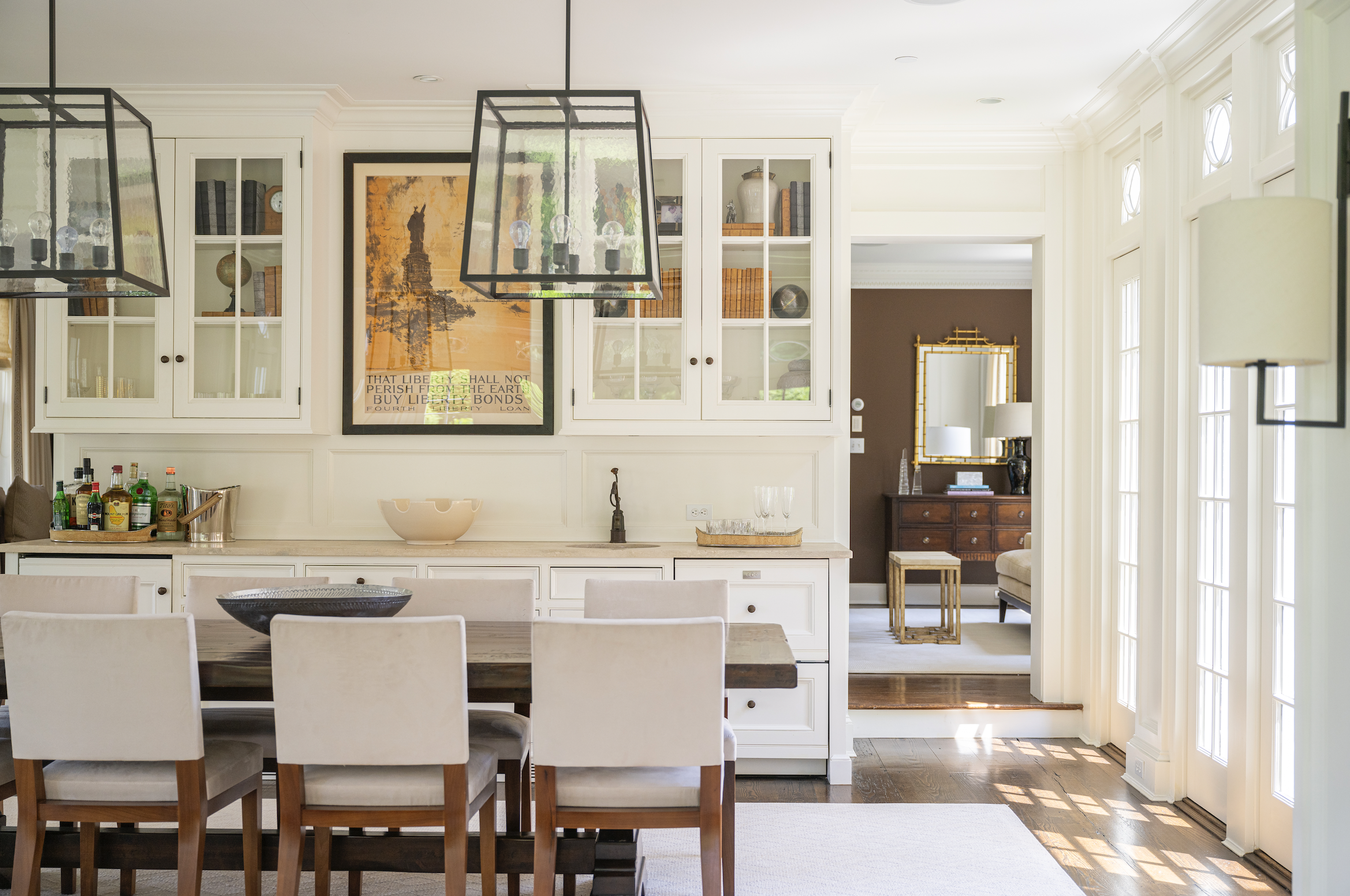
I would likely begin the day in the sunroom, drawn there for its light and quiet orientation—there’s something about that space in the morning that feels both grounding and restorative, an ideal place for coffee and a slow start to the day.
From there, I imagine naturally gravitating out to the field house. It offers a different rhythm—more focused on wellness and retreat—and becomes a place to reset, whether through movement, stillness, or simply stepping away from the main house. That progression, from the intimacy of the sunroom to the openness of the field house, reflects the way the property supports a full and balanced daily experience.
Looking back, what makes this project particularly memorable for you?
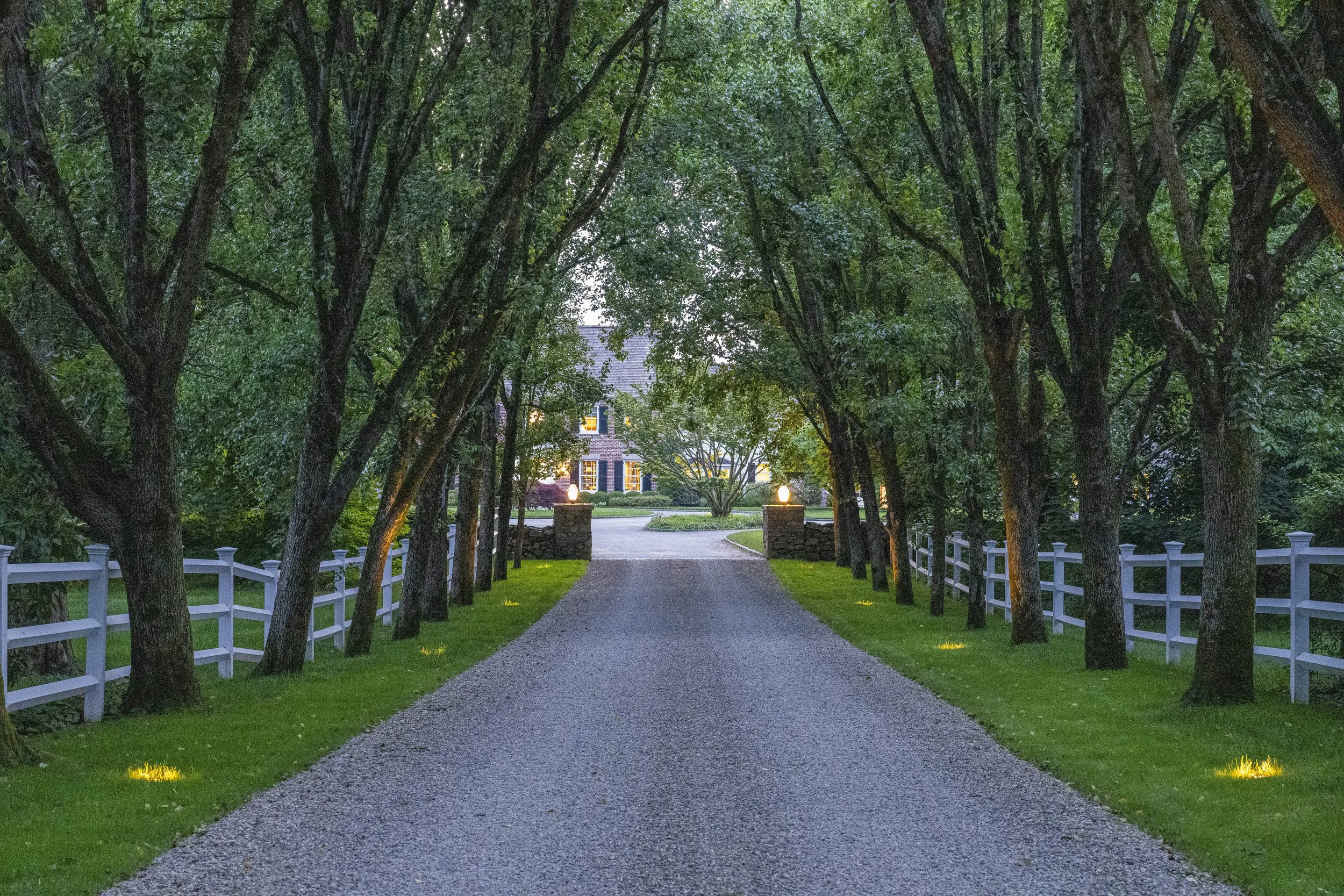
What makes this project particularly memorable is the strength of its setting and the clarity of its stewardship. The approach alone leaves a lasting impression—the allée of Bradford Pear trees flanking the drive establishes a sense of arrival that is both graceful and unmistakable. It sets the tone immediately, grounding the house in a landscape that feels composed, intentional, and enduring.
Equally meaningful has been the experience of working with the clients. Since this project, I’ve had the opportunity to collaborate with them on multiple properties, and that continued relationship speaks to a shared vision. They bring a genuine appreciation for design and an unwavering commitment to quality.
In this instance especially, there was a mutual understanding that the integrity of the property should be preserved—not overwritten. That alignment allowed the work to unfold in a way that feels both respectful and enduring, which ultimately is what makes the project so memorable.