
Discover The Sanctuary of Loma Esperanza
In the hills above Las Terrenas, on the Samaná Peninsula, Loma Esperanza is quietly becoming one of the most distinct private enclaves in the Caribbean. The setting pairs dramatic hillside views with clean, restrained architecture. It's a place built for privacy, for slowing down, and for a community of owners who've come from all over the world to be here. Megan Probst, together with Leo Faboux, represents some of the most sought after homes in Loma Esperanza, and the enclave is quickly setting a new standard for private luxury living in the Dominican Republic. We sat down with three owners who know this place best: Lawrence Lenihan of Villa Aura, Alain Martinez, President of Loma Esperanza and developer and owner of Endless Summer Collection, and Romain Jardinier, who recently closed on Mahana. They shared what drew them here, what makes this stretch of coastline so special, and the thinking behind their homes.
Villa Aura — Loma Esperanza, Las Terrenas, Dominican Republic — In Conversation with Lawrence Lenihan, Owner
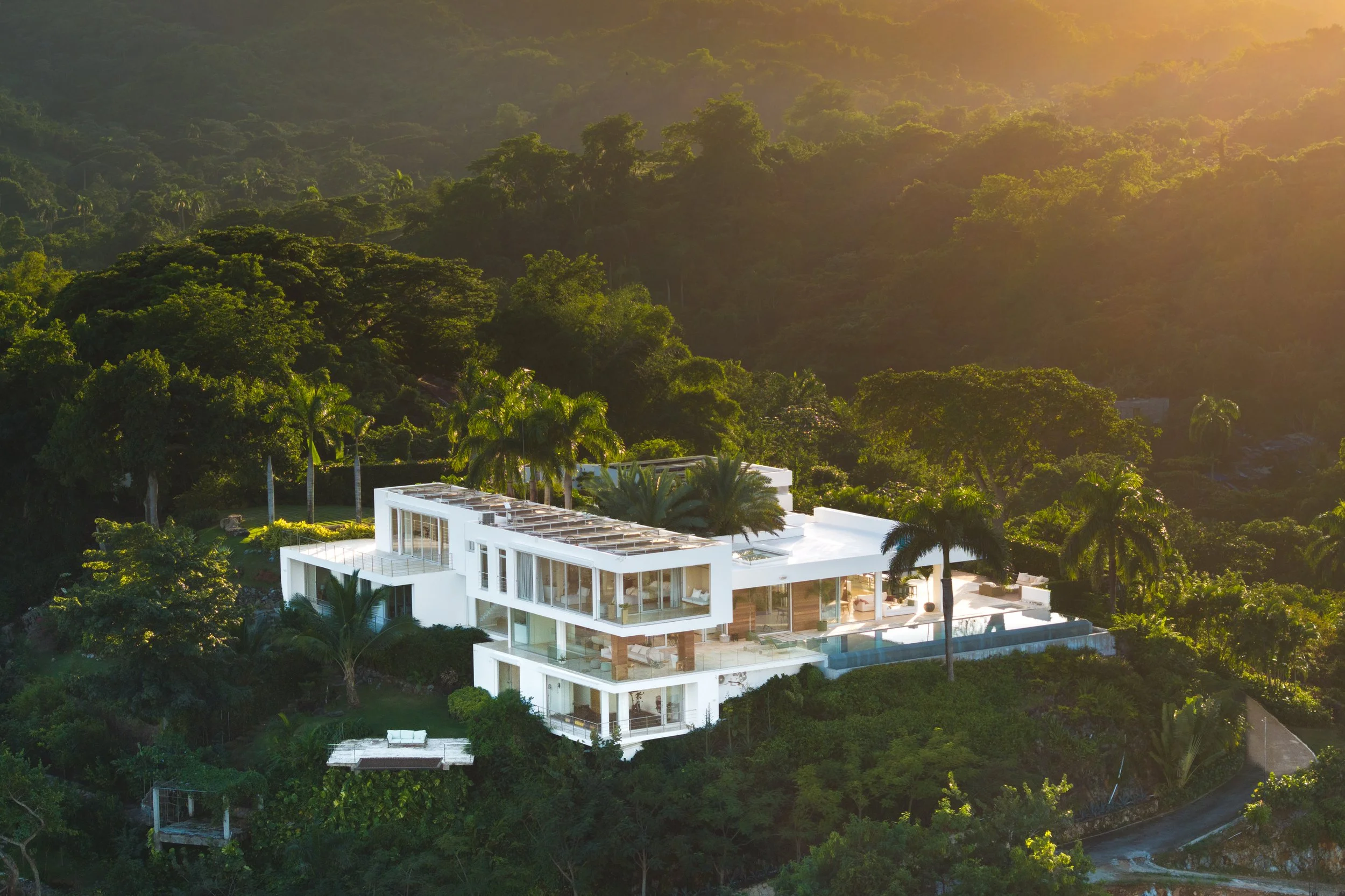
Loma Esperanza has quietly cultivated one of the most distinctive international communities in the Caribbean, with a particularly strong French presence. What does the culture of this town feel like to someone experiencing it for the first time, and what do you think continues to draw discerning buyers to this part of the Dominican Republic?
Loma Esperanza is the frontier of Las Terrenas. Open mountain ranges, jungle on every side, the ocean below — on a clear day you can see from Cabo Cabrón almost all the way to Río San Juan. It's a way to participate in Las Terrenas without the hubbub of Las Terrenas. Part of it, but completely separate. It's a community of beautifully situated homes — private, peaceful, set up so you can just soak up everything this part of the country has to offer while being minutes away from everything that matters.
There is a particular relationship between architecture and nature in this region that feels intentional rather than incidental. How do you think the surrounding landscape has shaped the way people design and live in their homes here?
One of the most striking things about Loma Esperanza is that the land forces you to be part of it. The steepness, the terrain, the lushness — you can't just drop a house on a lot here. The land doesn't allow it. Even if you wanted to design against it, the terrain guides you, and ultimately forces you to embrace it. That's what makes the homes here beautiful. They aren't sitting on the landscape. They're inside it.
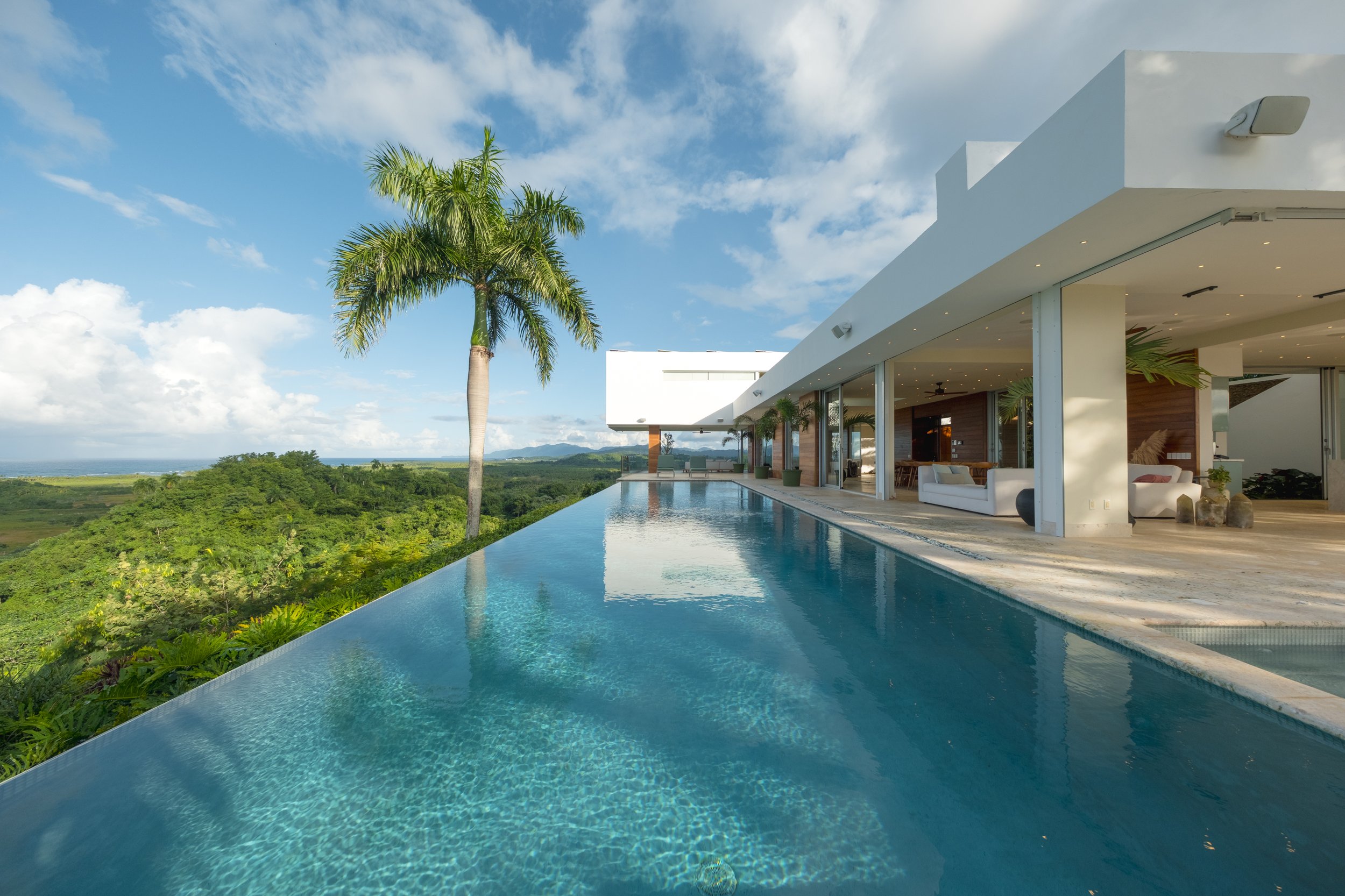
For many who discover Loma Esperanza, the lifestyle itself becomes the draw as much as any single property. How would you describe the rhythm of daily life here, and what does it offer that other luxury destinations simply cannot replicate?
The rhythm of Loma Esperanza is whatever rhythm you want to play at. Tennis, padel, the beach. The privacy of your own home. The jungle, the views. Proximity to town, restaurants, waterfalls, coffee plantations, deserted beaches. The beat is the one you choose — and it can be different every day. That's what makes this place hard to replicate. Most luxury destinations sell you a single tempo. Loma Esperanza lets you pick yours.
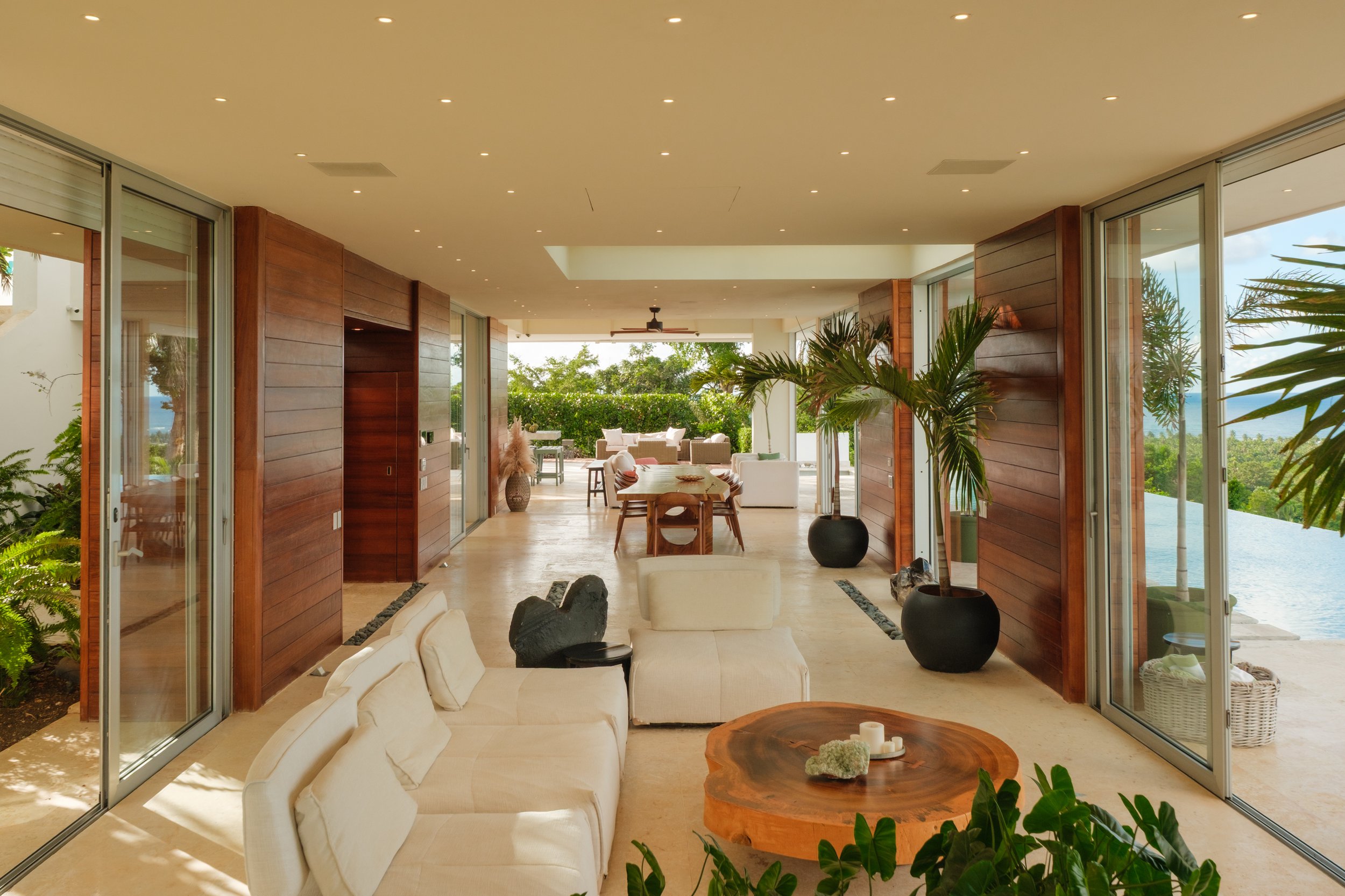
Your path to Las Terrenas began through your work in the Dominican Republic, and Loma Esperanza became something far more personal from there. What was it about this place — the sunrises, the stars, the stillness — that made it feel like somewhere worth holding onto?
It started through our factory in Santiago. I was spending more and more time in the DR and decided I wanted a place of my own here — somewhere I could be in this beautiful country for real, not just passing through. I asked someone, "Is there a place where I can have jungle, mountain, and beach all at once — all in one piece of nature?" He said, "I have just the place for you. It's called Las Terrenas."
I came, I saw the house in Loma Esperanza, and I knew immediately. This was where I wanted to be. What made it something worth holding onto wasn't any single feature — it was the stillness. Watching the sun come up over the ocean with nothing moving but the light. Sitting outside on a clear night and watching the moon rise into a sky full of stars. That kind of quiet is rare anywhere in the world, and almost impossible to find this close to everything else you'd want.
The fruit trees and lush landscape were a significant part of the property's appeal for you. How do those natural elements shape the everyday experience of being at Villa Aura, and what do you hope someone feels when they arrive here for the first time?
There's nothing in the world that tastes better than fruit from your own trees, vegetables from your own garden, honey from your own bees — and getting to enjoy all of it in the middle of this kind of nature. I have literally 70 different varieties among the hundreds of fruit trees in the garden. Being able to walk down into it any morning and pick from that is one of the most spectacular luxuries I've ever had in my life. That's what I hope someone feels when they arrive at Villa Aura — that this isn't a property you live next to. It's one you live inside of.
Villa Endless Summer Collection, Loma Esperanza, Las Terrenas, Dominican Republic — In Conversation with Alain Martinez, Developer, Owner, and President of Loma Esperanza
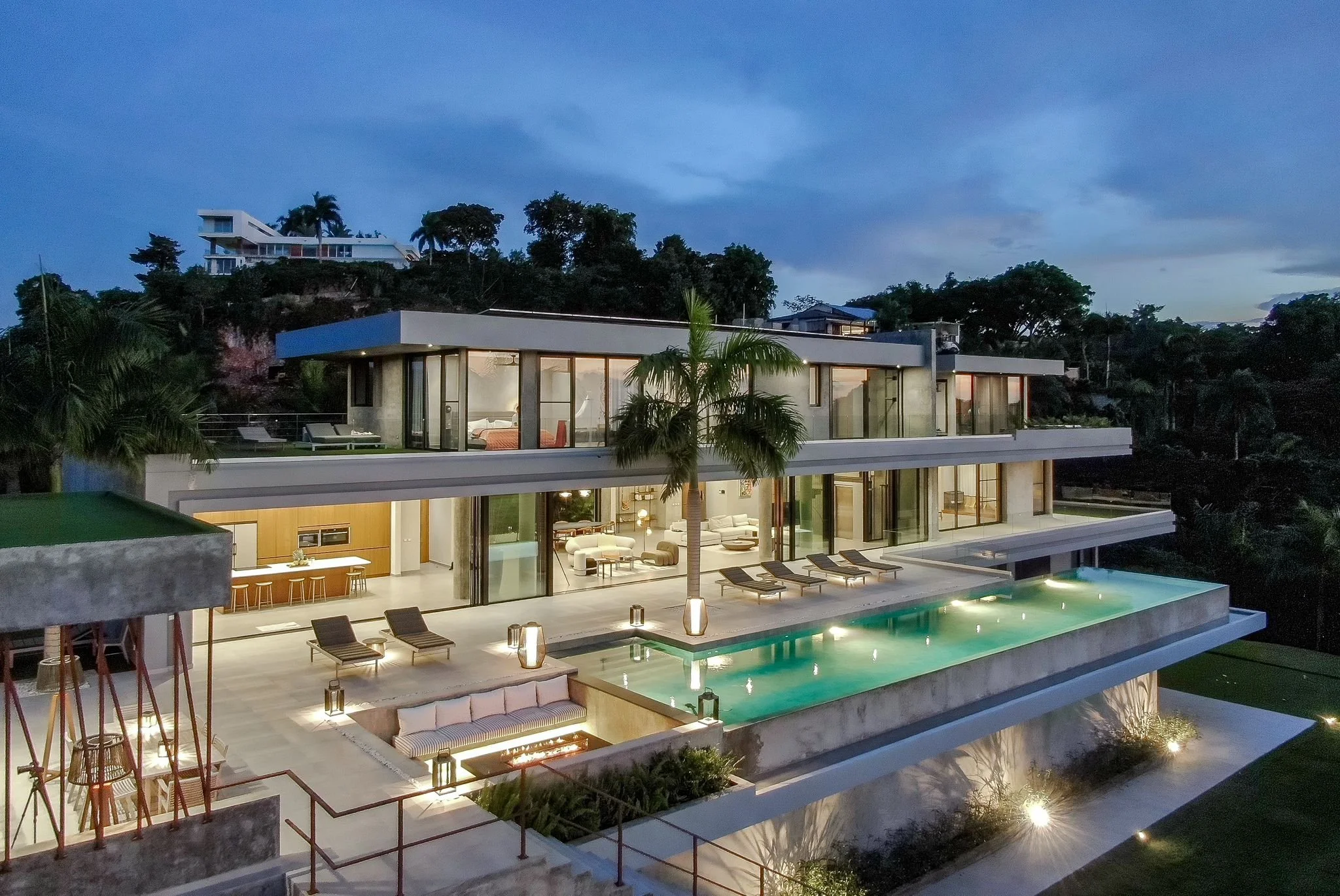
Endless Summer
Loma Esperanza has quietly cultivated one of the most distinctive international communities in the Caribbean, with a particularly strong French presence. What does the culture of this town feel like to someone experiencing it for the first time, and what do you think continues to draw discerning buyers to this part of the Dominican Republic?
Las Terrenas and Loma Esperanza have something most luxury destinations spend millions trying to manufacture and never quite achieve: authenticity. For someone arriving for the first time, what strikes you is the effortless coexistence of worlds — the warmth and rhythm of Dominican life alongside a cosmopolitan community that has quietly made this corner of the Samaná Peninsula its own. Europeans discovered it first, drawn by its privacy and natural beauty, and settled here in earnest over three decades ago. Today it draws discerning buyers from across the US and Canada who find, to their surprise, that nothing they encountered in Mustique, Saint-Barth, or the Côte d’Azur quite compares. The difference is that this is not a resort. It is a real place, with real life — exceptional restaurants, a genuine local culture, and a social fabric woven by people who chose to be here, not just visit. That is what keeps them coming back, and what ultimately keeps them.
You are both the developer behind Villa Endless Summer and the President of Loma Esperanza. How has leading the community shaped your vision for what this development could and should be?
Being both the developer of Villa Endless Summer and the President of Loma Esperanza is not a conflict of roles — it is the source of the project’s coherence. When you are accountable to a community, when your neighbours are your responsibility as much as your investment, your decisions carry a different weight. Every choice at Villa Endless Summer — in scale, materials, placement, proportion — was made through that lens. The amenities that matter to residents, from the tennis and padel courts to the private beach access, were not added as afterthoughts to drive a sale; they were conceived as part of a complete way of life. The community shaped the villa, and the villa was designed to give back to the community. The result, we hope, is a residence that feels inevitable rather than imposed, as though it grew here rather than was placed here.
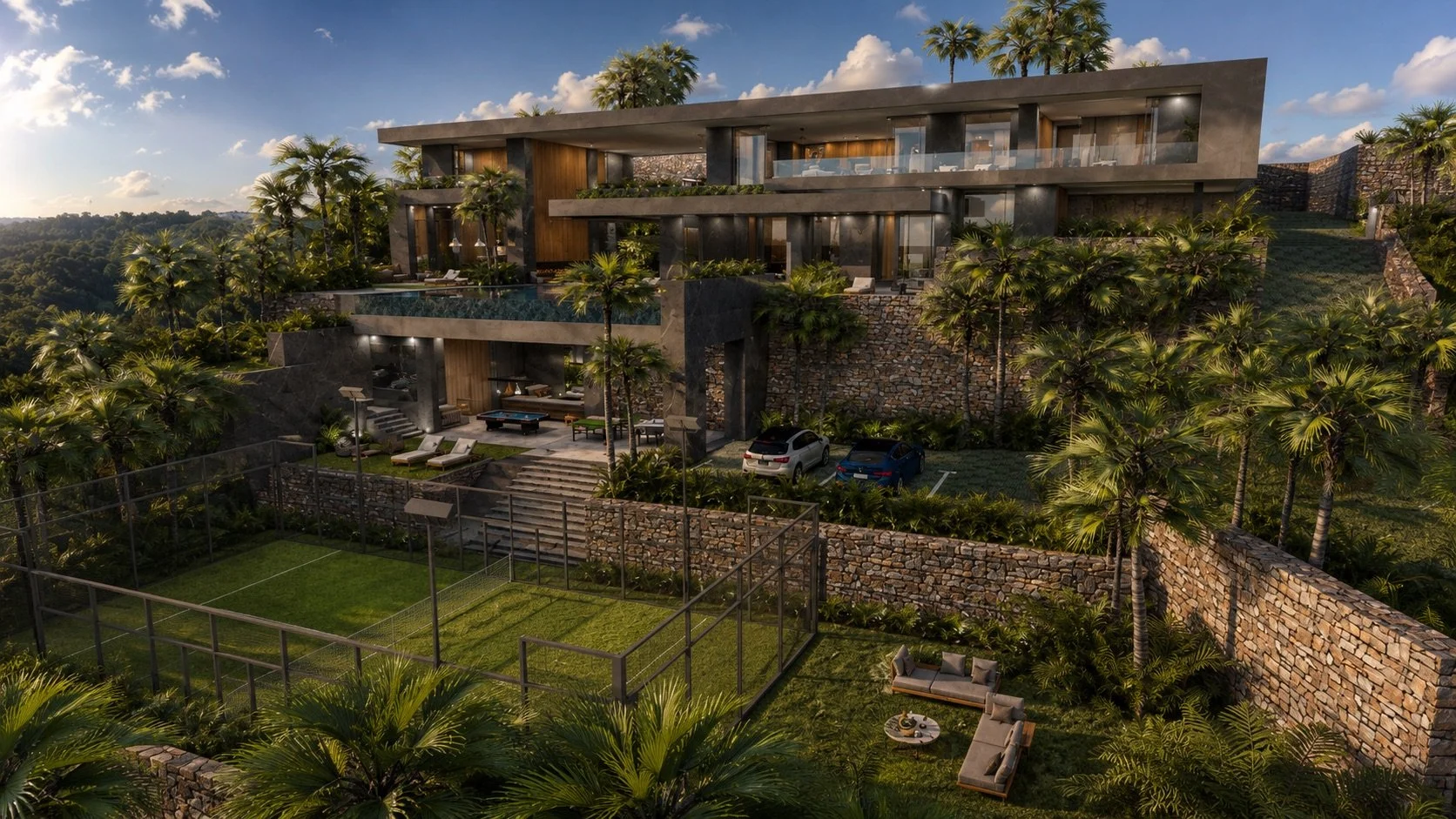
Rendering of Endless Jungle
The Endless Summer Collection reflects a deliberate philosophy rooted in sustainability and a deep connection to the natural environment. Where did that vision come from, and how has it evolved as the community has grown?
The vision was, in part, practical. When you live this close to nature — truly close to it, not the resort approximation — you quickly understand its rhythms and its demands. You realise that genuine luxury means autonomy: independence from grid failures, from water shortages, from the fragility that makes so many otherwise beautiful places frustrating to inhabit long-term. So Endless Summer is autonomous in power and water, come rain or sunshine. That is not a marketing point; it is a design philosophy. Beyond the infrastructure, the guiding principle was always that the natural environment is the asset — the views, the wildlife, the silence, the biodiversity. Architecture here exists to protect and frame that asset, not to compete with it. Even the courts — tennis and padel, set within the landscape — were sited and designed with that philosophy in mind. The less the built environment announces itself, the more the landscape speaks.
As someone so deeply embedded in the identity of this place, what do you think makes Loma Esperanza unlike anywhere else in the Caribbean, and where do you see it going in the next decade?
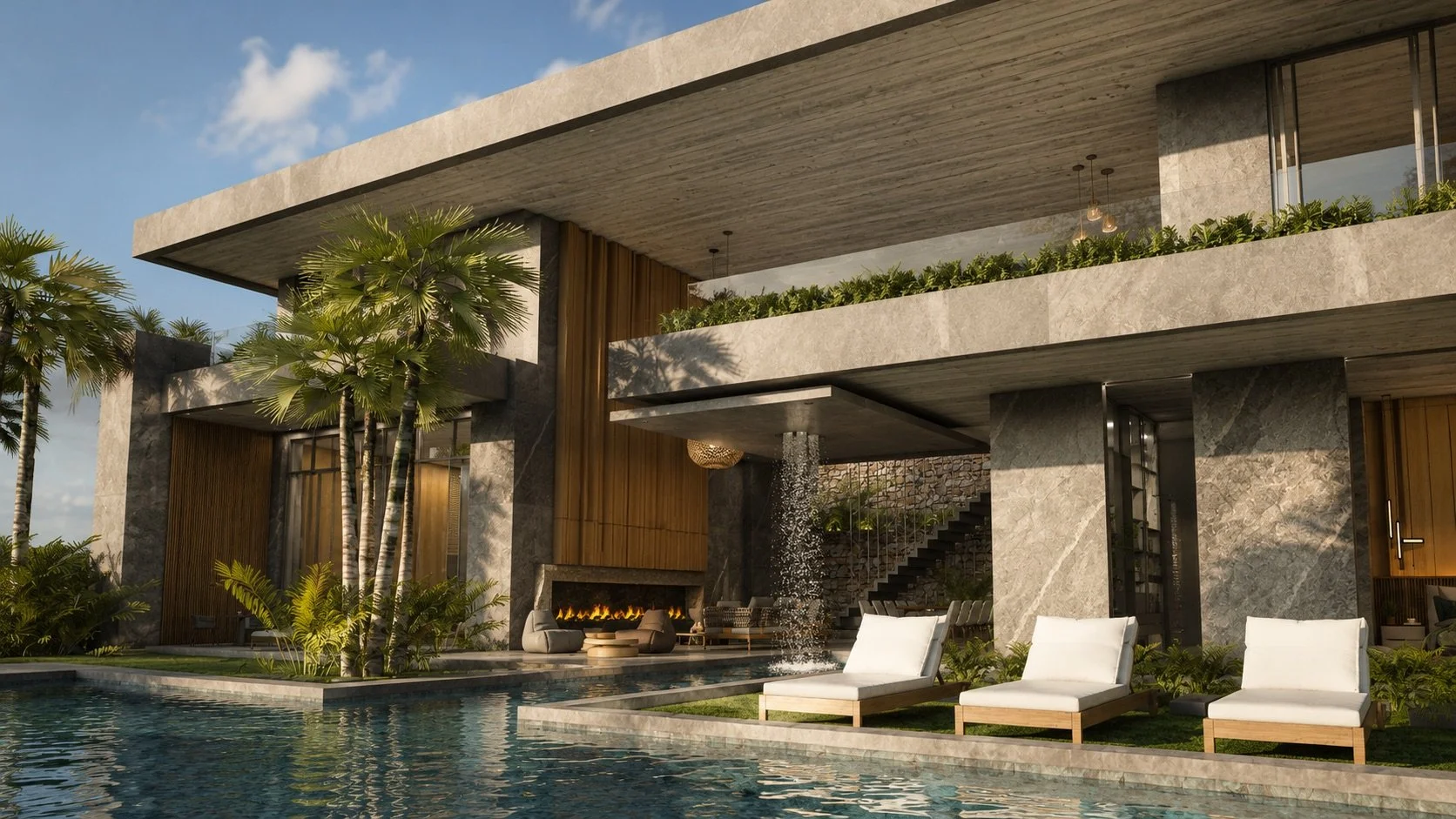
Rendering of Endless Jungle
Compared to Punta Cana or Casa de Campo — both extraordinary in their own right — Loma Esperanza offers something that cannot be engineered after the fact: privacy, space, and a landscape that has been protected rather than consumed. There is no anonymity at a famous resort. Here, a guest of considerable means can arrive, decompress, and exist without an audience — whether that means a morning on the padel court, an afternoon on the water, or simply doing nothing at all in one of the most beautiful natural settings in the Caribbean. My wife and I have lived across many countries and spent the better part of our lives exploring what the world has to offer — and over fifteen years, we have not found a better place to settle. For us, the fact that our daughter has chosen to invest and raise her own family here is the clearest possible signal of what this place represents — not just a property, but a legacy. In ten years, Loma Esperanza will look very much as it does today — that is not a limitation, it is the promise. The places that hold their character, that resist the pressure to over-develop, become exponentially more valuable over time. With its proximity to Miami, Montreal, and the major European capitals, and with so little comparable inventory left in the Caribbean, the trajectory here is clear. We are not building toward something. We are protecting something that already exists and that cannot be replicated.
Mahana, Formally Known as Casa Sybil- Loma Esperanza, Las Terrenas, Dominican Republic — In Conversation with Romain Jardinier
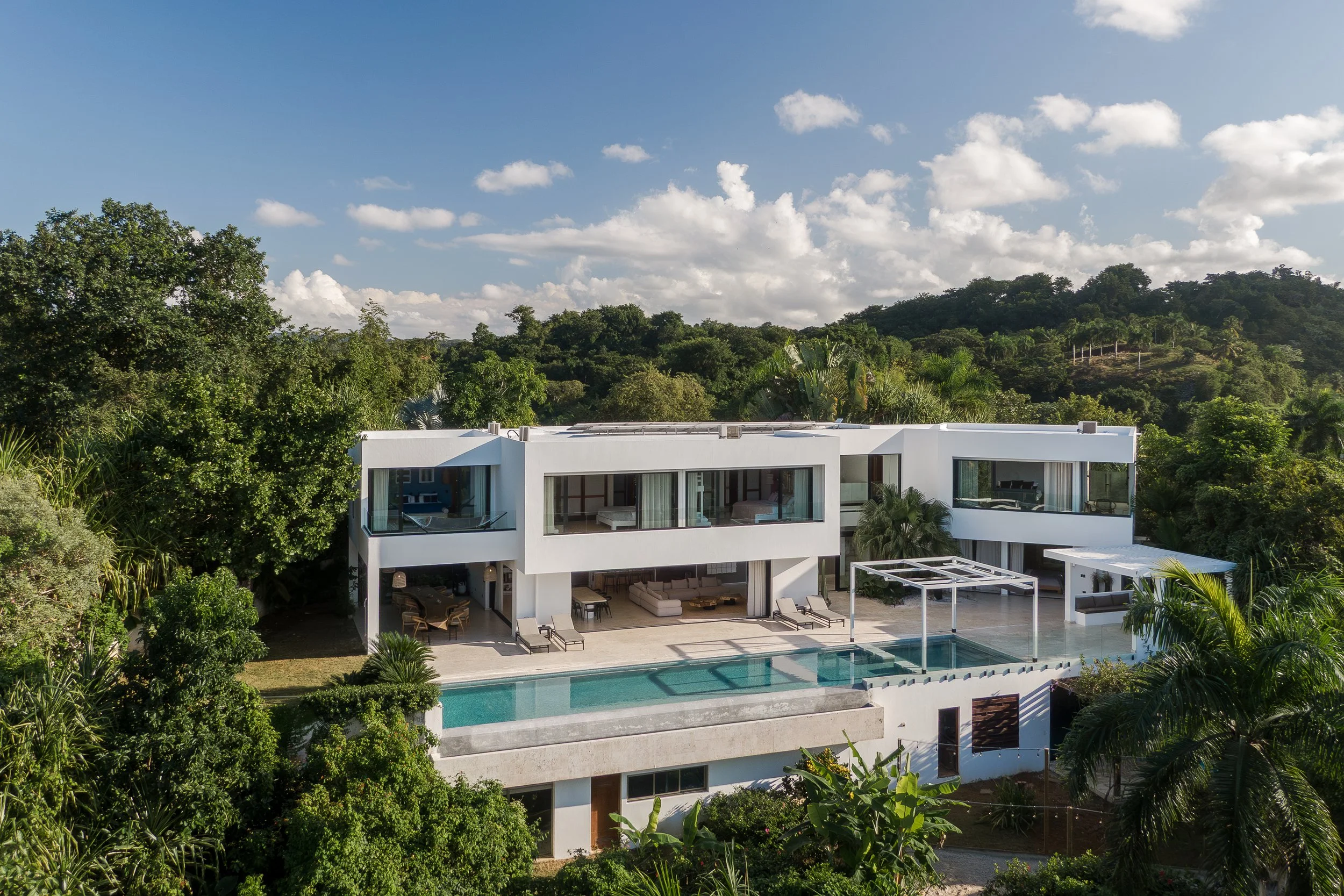
You undertook a full renovation of Mahana alongside a designer, yet the home still carries the warmth and character of its original bones. How did you approach that balance, knowing when to preserve and when to transform?
When we renovated Mahana, the goal was never to erase its identity. We wanted to elevate the home while preserving its soul. For this project, we brought in an architect from Spain to provide an outside perspective and a very sensitive approach to the spaces. Together, we worked on opening up the house, bringing in more natural light, and strengthening the connection with the ocean and the surrounding tropical nature. At the same time, we wanted to preserve the warm and relaxed atmosphere that originally gave the home its charm. The balance came from respecting the spirit of the house while rethinking every detail around comfort, materials, and the flow of the spaces. We also decided to rename the property Villa Mahana, as this Polynesian word — meaning sun and light — perfectly reflects the warmth and atmosphere you feel in every part of the home.
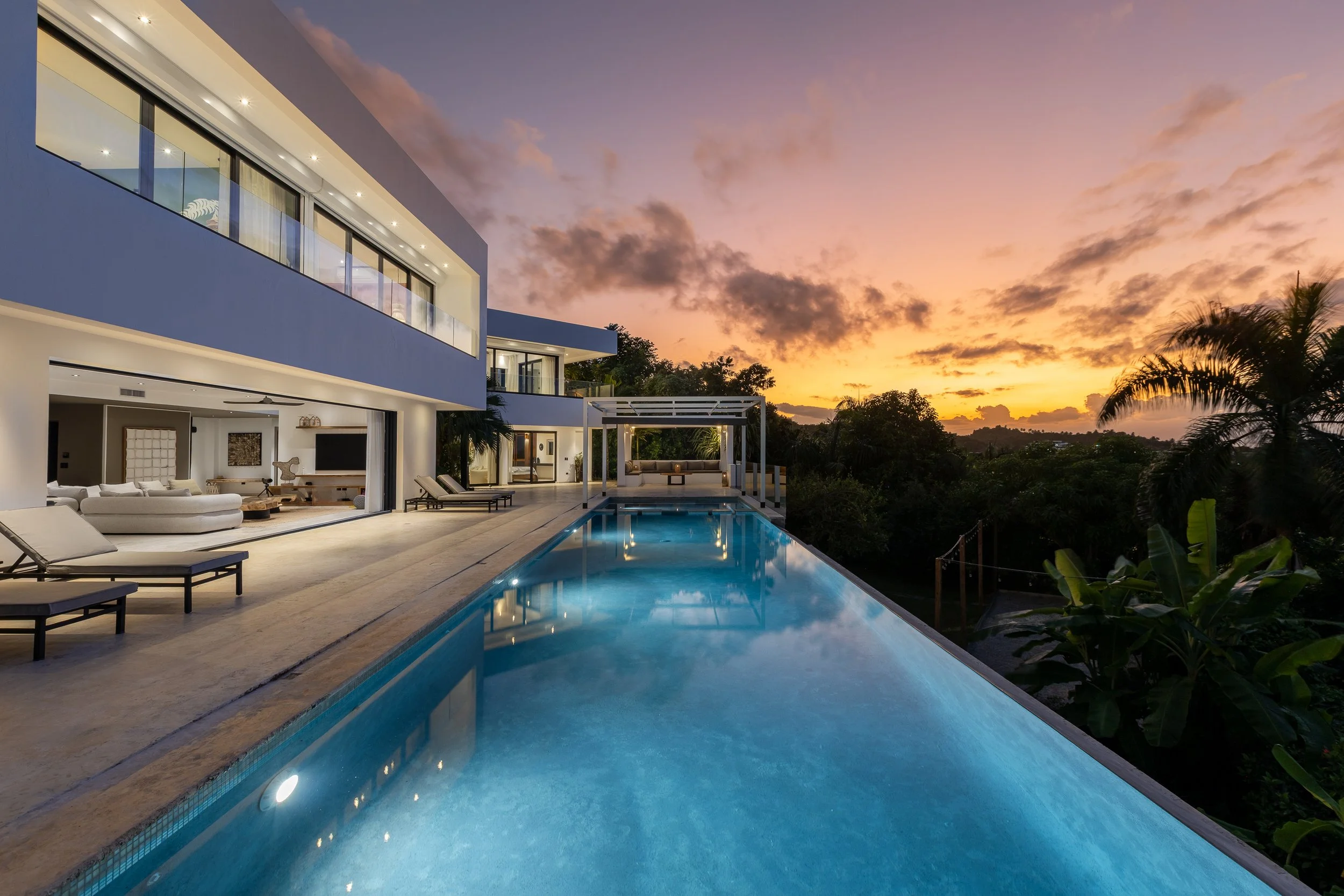
There is a particular relationship between architecture and nature in this region that feels intentional rather than incidental. How do you think the surrounding landscape has shaped the way people design and live in their homes here?
In Loma Esperanza, it is difficult to separate architecture from the surrounding landscape. The hillsides, ocean views, tropical vegetation, and constant trade winds naturally influence the way homes are designed. Living spaces tend to open generously onto the outdoors, terraces become true extensions of the home, and the boundary between inside and outside begins to disappear. This approach encourages a lifestyle that is more connected to nature, allowing residents to fully embrace the climate and the beauty of their surroundings every single day.
For many who discover Loma Esperanza, the lifestyle itself becomes the draw as much as any single property. How would you describe the rhythm of daily life here, and what does it offer that other luxury destinations simply cannot replicate?
The rhythm of daily life in Loma Esperanza is perhaps its greatest luxury. Mornings often begin slowly, with ocean views or a walk along the beach, before giving way to work, sports, family activities, or time with friends. It is a place where you can maintain an active and productive life while still feeling as though you are permanently on holiday. What truly sets it apart is its ability to offer a form of understated luxury: exceptional natural surroundings, a welcoming international community, a sense of freedom, and the opportunity to reclaim time for the things that matter most. Few luxury destinations manage to combine all of these elements with such authenticity.
What was the moment you knew Loma Esperanza was where you wanted to put down roots, and how has living here shaped the way you think about home?
The first time we discovered Loma Esperanza, there was an immediate feeling that this place was different. The ocean views, the peaceful atmosphere, the lush nature, and the sense of privacy all create something very unique. It feels connected to Las Terrenas while remaining quiet and preserved. Living here has changed the way we think about home — less about square meters or design alone, and more about how a place makes you feel every day. The indoor-outdoor lifestyle, the sunsets, the slower rhythm… it naturally becomes part of your way of living.
In an era of over-engineered luxury, Loma Esperanza remains an enduring testament to privacy, authenticity, and design intent. Whether experienced through the fruit-laden acreage of Villa Aura, the self-sustaining mastery of Villa Endless Summer, or the light-filled retreat of Villa Mahana, the sentiment remains singular: a life lived in absolute harmony with nature. As this community gently evolves, it stands as a rare, protected haven for those who value quiet elegance over an audience.